Table of contents
Silent, slow, and startlingly intimate, stand-up paddling has become the coastal habit that slips under the radar, even as participation keeps climbing. In the United States alone, the Sports & Fitness Industry Association counted 3.7 million stand-up paddlers in 2023, a figure that puts the sport among the most practiced paddle disciplines. From Mediterranean coves to Atlantic marshes, the board is turning day-trips into micro-expeditions, and giving shoreline communities a new way to see, and sell, their coast.
Coasts feel closer from a paddleboard
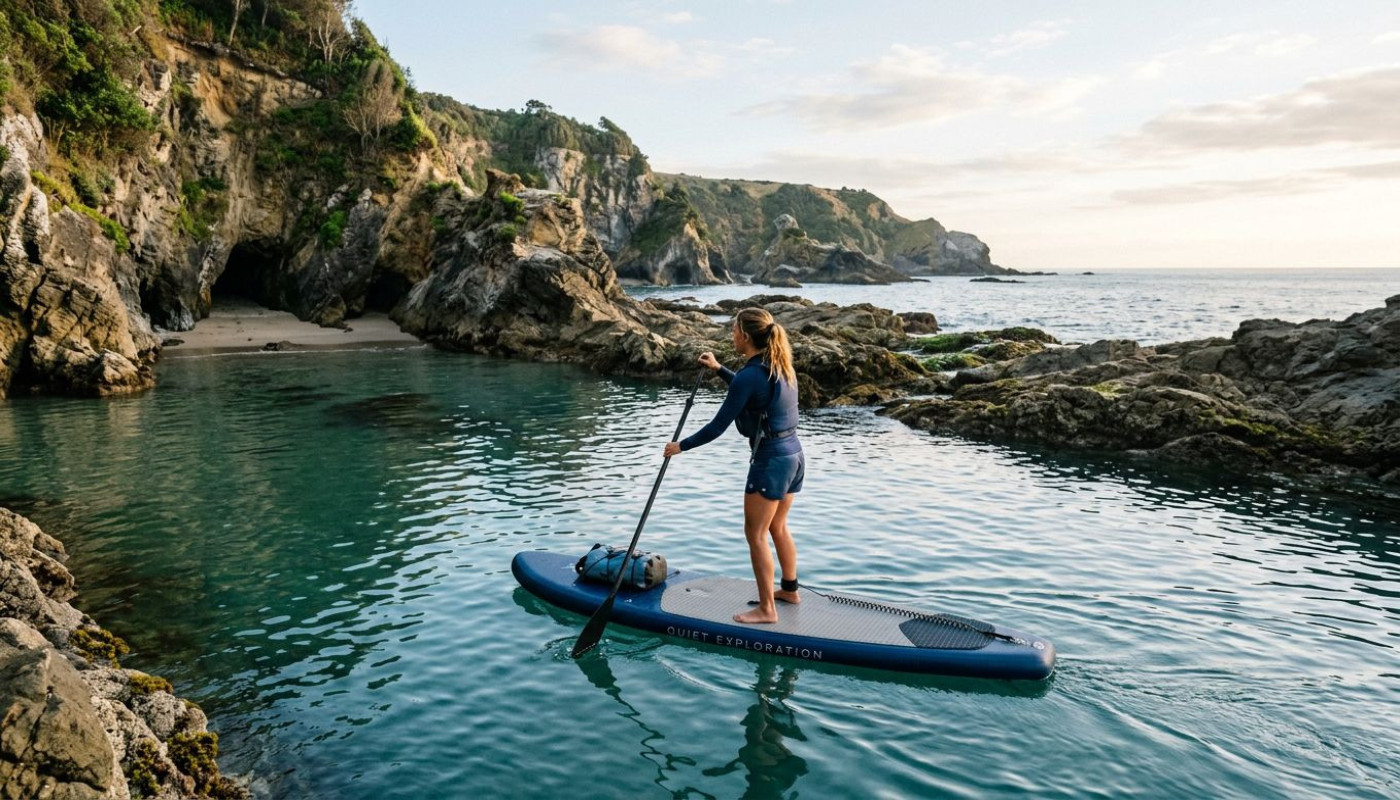
It starts with the speed, or rather the lack of it. A paddleboard moves at the pace of observation, which is precisely why more coastal travellers are using it as a tool for exploration rather than a pure workout. In tourism surveys, “nature-based” experiences continue to outpace conventional sightseeing, and paddleboarding fits that demand with minimal infrastructure, no engine noise, and access to water that boats cannot always reach. You can launch from a city beach, follow a rock line for a kilometre, then tuck into a pocket cove where motor traffic is restricted, and where the only sound is the paddle drip and the wind.
This closeness is also geographical. A touring kayak may still be the choice for distance, but stand-up paddling is winning on “last-mile” coastline, the in-between stretches where reefs, sandbars, and shallow lagoons complicate navigation. Marine-protected areas increasingly restrict anchoring and high-speed traffic; a board can skim over seagrass meadows with far less risk of prop scarring, and it can be carried by hand across a short dune or a harbour wall. For coastal towns, that translates into a product that is easy to rent and easy to regulate, which is why rental fleets have multiplied on lakefronts and seafronts alike, and why many guided operators now sell sunrise and sunset paddles as their entry-level excursion.
The experience changes the way people read a shoreline. Paddlers learn to watch wind lanes, cloud build-ups, and tide lines with a practical attention that resembles seamanship, and the board’s height offers a clear view into the water on calm days, revealing fish, eelgrass, and the texture of the seabed. That is why coastal guides often frame a stand-up session as a “floating walk,” a half-sport, half-naturalist outing where the goal is not to cover miles but to understand a place. It is also why safety becomes part of the narrative: the same tide that reveals a sandbank can cut off a return route, and the same calm bay can turn choppy when the breeze switches. The board invites discovery, and it demands respect.
The boom is real, and measurable
Numbers help explain why coastal exploration is shifting. According to the Sports & Fitness Industry Association’s 2024 participation report (covering 2023), stand-up paddling reached 3.7 million participants in the US, a sign of resilience after the pandemic surge and the subsequent correction in many outdoor categories. Europe does not have a single harmonised dashboard, but national federations, rental operators, and coastal tourism boards have broadly reported the same pattern: more beginners, more occasional paddlers, and a steady expansion of guided “discovery” formats, from estuary wildlife tours to urban harbour circuits.
The economic footprint is not limited to boards and paddles. What has grown with the sport is a whole ecosystem of coastal micro-spending: launch fees in protected areas, shuttle services for downwind routes, lessons, storage, repairs, and, crucially, gear that makes cold water feel accessible. This last point matters more than it sounds. Coastal exploration does not happen only in July; shoulder seasons are where many towns try to extend revenue, and where paddling can thrive if people can stay warm. In northern Europe, New England, and much of the Atlantic façade, water temperatures remain low well into late spring and fall sharply after summer, and the practical barrier to entry is not motivation, it is exposure.
That is why the growth story is increasingly tied to equipment choices, and to a better public understanding of cold-water risk. Rescue services have repeated the same message for years: air temperature is not water temperature, and cold shock can incapacitate strong swimmers. In that context, paddlers who treat the board as a “coastal walking path” are learning to prepare like mariners, checking wind forecasts, carrying a leash, wearing buoyancy where required, and dressing for immersion. Gear is part of the safety calculus, and it can be the difference between a confident spring launch and a season spent on land, which helps explain why searches for surf wetsuits and related waterwear spike as soon as coastal operators start advertising early-season sessions.
Wildlife, rules, and the new etiquette
“Leave no trace” takes on sharper edges on water. Paddleboards make it easy to approach places that are sensitive, and the very qualities that make the sport attractive, quiet movement and shallow access, can also disturb wildlife if etiquette is poor. Seabird nesting zones, seal haul-outs, and saltmarsh edges are particularly vulnerable, and many protected areas now publish specific paddling guidance: keep distance, avoid landing on dunes in breeding season, and treat wildlife viewing as observation, not pursuit. The shift is cultural as much as it is regulatory, and it is happening because the user base has broadened beyond the traditional water-sport crowd.
Local rules have followed, sometimes unevenly. In some regions, paddlers are asked to carry the same safety equipment as small craft; in others, regulations focus on launch points, zoning, and commercial permits. The patchwork can confuse travellers, but it also reflects a genuine attempt to integrate a new mass activity into already crowded coastal spaces. Harbours are a prime example: paddleboards are slow and manoeuvrable, yet they are also low-profile, and in busy marinas the risk is not the paddler’s skill, it is visibility amid traffic. As a result, many coastal towns have created designated corridors, time windows for lessons, and clear signage at popular launch sites, an approach that reduces conflict with swimmers, anglers, and boaters, and makes the sport easier to welcome.
Etiquette is also about sound and space. Stand-up paddling’s quiet has become its brand, but quiet does not mean invisible. On narrow channels, a board can block a route; on reefs, it can damage fragile ecosystems if people stand where they should float. Guides now teach “soft skills” alongside paddle strokes: how to read right-of-way, how to keep distance in a group, and how to turn back early when the wind line darkens the water. These habits are slowly professionalising what was once sold as a casual beach toy, and they make coastal exploration safer, and more compatible with conservation goals. The best operators have understood that the future of the activity depends on trust, and trust depends on behaviour.
When weather turns, preparation matters
Coastal exploration is seductive, and it is also unforgiving. The same geography that creates perfect flat-water bays can also create rapid weather shifts, with headlands accelerating wind and river mouths turning swell into chop. For paddlers, the risk profile changes quickly: stability drops when waves hit from the side, fatigue rises when you fight a return leg against wind, and a leash becomes not an accessory but a lifeline. That is why experienced coastal paddlers plan routes like short voyages, with exit points, tide timing, and a hard turnaround time, and why many instructors now teach basic navigation concepts even to beginners.
Preparation is physical, and it is logistical. A phone in a waterproof pouch is useful, but coverage can be patchy; a whistle and bright clothing can matter in traffic; in colder months, thermal protection can be critical. Public safety agencies have long warned that cold-water immersion can trigger an involuntary gasp reflex and rapid loss of function, a chain of events that can unfold in minutes. This is not alarmism, it is physiology, and it is why coastal paddling in spring, autumn, or higher latitudes should be approached with the same seriousness as other water sports. The aim is not to turn a peaceful activity into a militarised checklist, it is to remove the predictable failure points that ruin days, and sometimes end them.
Communities that rely on the sea are also adapting their messaging. Some rental companies now set wind limits, ask clients to demonstrate basic control, or restrict novices to sheltered zones; guides increasingly include a short briefing on tides and local hazards, and some destinations have launched simple colour-coded advice boards at beaches, much like ski resorts. These measures are not about discouraging newcomers, they are about making exploration sustainable: fewer rescues, fewer conflicts, and more repeat visitors who feel they have learned something. Done well, the board becomes a passport to the coast, and safety becomes the quiet enabler of that freedom.
Planning your next coastal paddle trip
Book ahead in high season, and check if your destination requires permits or designated launch areas, especially in marine parks and busy harbours. Budget beyond the rental, because lessons, shuttles, and cold-water gear can change the experience, and extend your season. Look for local subsidies or tourism passes that bundle guided activities; many coastal regions offer discounts in shoulder months to spread demand.
Similar articles